





How Smart Camera Technology Is Helping Wedding Photographers Capture Candid Moments with Greater Accuracy and Creative Control
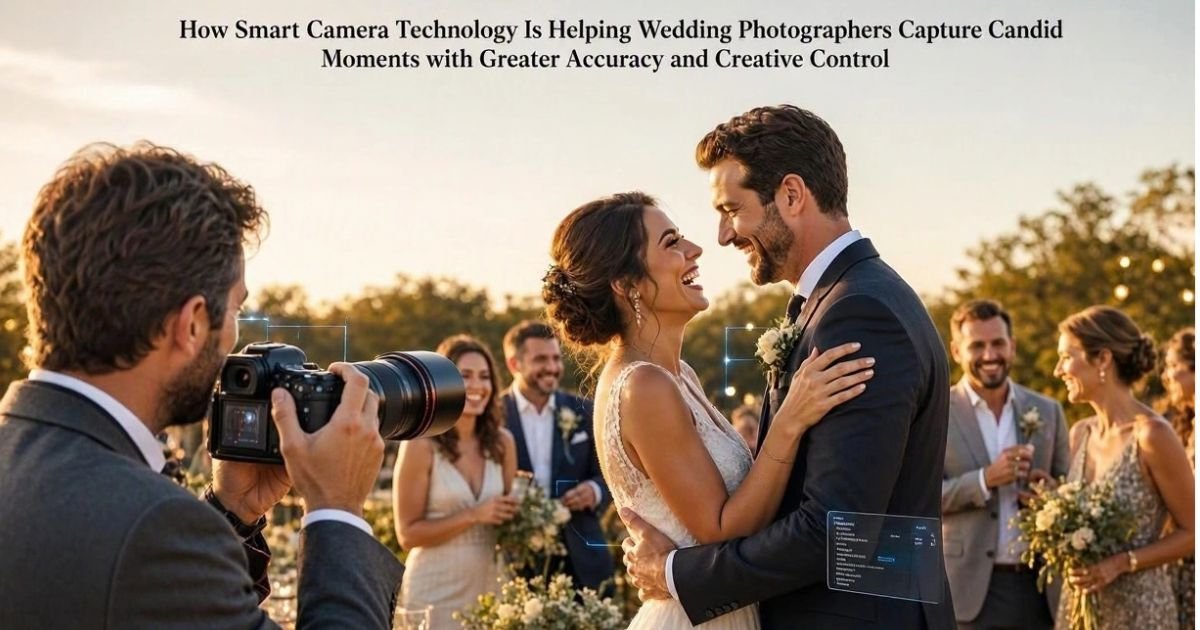
Wedding photos in recent years have begun to take on a more naturalistic look than before. The unexpected flash of a smile, an emotional gaze, and the spontaneity of interaction come and go very quickly, offering little time for any adjustment of camera parameters. Smart camera technology is addressing some of these challenges by providing intelligent autofocus, recognition of subjects, stabilisation of images, computation and processing, and automation of exposure control. As the smart camera market develops further, these capabilities will become increasingly valuable for photography in general. Instead of undermining creativity, smart cameras can handle certain technical tasks for photographers while they are working on timing and emotion, composition and storytelling.
How Smart Autofocus Helps Wedding Photographers Capture Fleeting Emotions
Candid wedding photography requires photographers to react to unpredictable movement. People move, turn, hug, smile, laugh, and socialize constantly. Traditional focusing methods become hard to use in changing conditions; therefore, modern autofocus technologies include face recognition, eye recognition, subject recognition, and tracking technologies to keep focus on the moving people.
- Eye and Face Detection: Intelligent autofocus is capable of recognising eyes and faces of a person and constantly adjusting its focus according to the movements of a subject. It becomes quite helpful in ceremonies while dancing, and even casual communication.
- Continuous Subject Tracking: Weddings are full of activities and movements, from couples walking through venues to guests moving across reception areas. Tracking technology can track the selected subject as they move within the frame. Thus, a photographer can spend less time on setting the focus again and again.
- Improved Response to Changing Compositions: It is rare for candid photos to stick to the standard compositions. A new participant might come into the frame, a couple may move closer together and so forth. With smart cameras, it is possible to make changes while the photographer continues his work on framing and timing.
- More Reliability in Spontaneous Photography: A fleeting expression cannot normally be recreated. Autofocus assistance can minimise the chances of taking technically flawed pictures due to inaccurate focus. But the technology remains an aid in the work of a photographer who decides which subject is more important.
Managing Difficult Wedding Lighting with Computational Imaging Technology
Weddings are known to provide some of the most difficult environments for photographers in terms of lighting conditions. The wedding could be held under sunny conditions, while the reception might be held in a hall with minimal lighting and high contrast. Computational imaging integrates sensor data, image processing, algorithmic software and now more machine learning into the process of capturing and processing images. Multiple exposures, high dynamic range, noise reduction, image stabilization, depth effects, and AI enhancement are some of the elements of the larger computational photography market.
- Dynamic Exposure Management: A smart metering system can measure the level of light and determine exposure settings to make adjustments. This would be handy in cases where subjects shift from a well-lit area to a shaded area. Manually set exposure could still be used for special visual effects.
- High-dynamic Range Processing: Wedding photos may include windows with high brightness, dark rooms, and people placed under different lighting. HDR and exposure fusion may help keep details in a greater range of tones. It is very useful in documentary photography when lighting cannot be adjusted.
- Enhancements of Low-light Shooting: Reception photos are usually taken in low lighting. Noise removal and image processing algorithms may help preserve detail and remove digital noise from the picture. It helps photographers shoot using available lighting.
- Image Stabilization: Stabilization through optics or electronics may minimise camera shake, especially when photographers shoot at low shutter speeds. Stabilisation will not prevent motion of the subjects, but it helps to remove blur due to the photographer’s hand movement.
How Smart Recognition Aids Accurate Focus in Crowded Wedding Scenes
Weddings are visually complex environments that involve various people moving around frequently and occupying the frame. People can pass in front of the couple being photographed, multiple interactions can occur simultaneously, and some subjects can be blocked at times. Modern subject recognition is built to analyse visual data and distinguish different people and objects in the scene. The evolution of deep-learning autofocus shows how cameras are now able to make decisions on the subjects to recognize and track in real-time.
- Human Subject Recognition: Detection of people can allow the autofocus system to identify people in the complicated composition. It would definitely be helpful when taking pictures of gatherings of people, cocktail parties, formal events, and even dance floor photography.
- Tracking with Temporary Obstruction: Sometimes there may be temporary obstruction to the subject by the guests, decorations, and architecture. Some advanced tracking systems can help to recognise and track the subject despite any obstruction. This can be useful in situations when the photographer is capturing the event and has limited control over the movement of the people.
- Group Photography: A group photograph requires varied focus because the people could be at various distances from the camera. Intelligent recognition is helpful in recognising faces; however, the photographer will have to select the right aperture and composition for the required depth of field.
- High-Speed Shooting: Smart cameras can shoot rapidly, making many images from a single interaction. This means the photographer could have additional choices in choosing the right expression or gesture that best captures the mood. The technology has helped to increase the number of frames but cannot help in determining the image that carries the most meaning.
The Evolving Role of Smart Cameras in Wedding Photography
The wedding consists of many processes taking place in several locations. The photographer may go from one ceremony to another, take photographs of a number of groups, shoot at a reception and engage in informal communication. With smart camera technologies, a photographer is able to work in such a challenging environment because they help him/her cope with rapid changes and have better control over the shooting process. For example, customizable controls, intelligent shooting modes, automatic settings, and high speed of operations will allow for reducing the amount of time necessary for technical changes.
When dealing with large weddings, the photographer is likely to react rapidly, changing from one subject or event to another. Customizable buttons and preset configurations enable him/her to gain access to frequently used tools. Automatic settings help deal with routine technical adjustments. High-speed operations allow reacting to unexpected situations without disturbing the workflow.
Smart cameras can also communicate and transfer images. They facilitate reviewing and distributing selected images. These features do not substitute professional skills of the photographer but just reduce technical requirements, thus, enabling the photographer to pay more attention to composition and other important aspects.
The Future of Smart Camera Technology in Wedding Photography
According to Pristine Market Insights research, technological advancements in the smart camera market continue to play a vital role in dictating the way photographers operate in the fast-paced wedding scene. This includes intelligent auto-focusing, object recognition, computational photography, exposure control, and image stabilisation technology. The technology is not an alternative to the creative decision-making capability of professional photographers; instead, it improves upon the skill set of professional photographers with the help of technology. With the ever-improving technology of smart cameras, there will be increased utilization of smart cameras in wedding photography because of their capability to manage accurate tracking of subjects, lighting, and quick decision-making.